A food material contains 70% moisture (wet basis). The food is dried for 3 hours at 80°C air temperature in a tray dryer such that 80% of its initial moisture is removed. Final moisture content (wet basis) of the dried food is
A. 31.82% correct
B. 46.67%
C. 56.00%
D. 20.01%
Q2MCQ1 mark
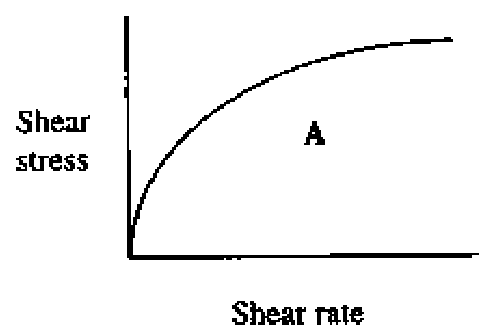
Liquid A obeys power law equation σ = kγ̇ⁿ (as shown in the attached figure) where σ is shear stress, γ̇ is shear rate, k is consistency index and n is flow behavior index.
The correct unit of consistency index and nature of liquid are
A. Pa s and Shear thinning
B. Pa sⁿ and Shear thickening
C. Pa s and Shear thickening
D. Pa sⁿ and Shear thinning correct
Q3MCQ1 mark
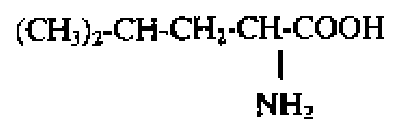
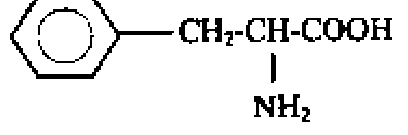
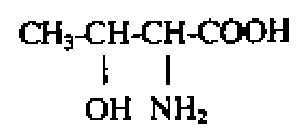
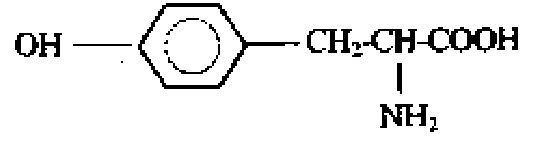
Identify the amino acid tyrosine from the following structures
A. (A)
B. (B) correct
C. (C)
D. (D)
Q4MCQ1 mark
Saponification number of a fat is the milligrams of KOH required to saponify 1 g of fat. The correct statement on saponification is
A. Fat with high amount of low molecular weight fatty acids will have high saponification number correct
B. Butter has low saponification number
C. Fatty acids with long carbon chains have high saponification number
D. Fat with low Reichert-Meissl number has very high saponification number
Q5MCQ1 mark
The expansion of the terms HACCP and GRAS are
A. Hygienic Associated Critical Control Point; Grossly Recommended As Safe
B. Hazard Analysis and Critical Control Point; Generally Recognized As Safe correct
C. Hygienic and Aesthetic Concept of Critical Products; Generally Recognized As Safe
D. Hazard Analysis and Critical Control Point; Grossly Recommended As Safe
Q6MCQ1 mark
Which two of the following statements are NOT the objectives of homogenization of milk?
i. Counteracting segregation for the most part of creaming thus avoiding sedimentation or phase separation
ii. Arresting rancidity of fat globules in milk
iii. Increasing fluidity of milk by lowering viscosity
iv. Improving the colour of the milk (more whitish)
v. Improving milk stability by preventing partial coalescence of fat globules
A. i and ii
B. ii and iii correct
C. iii and iv
D. iv and v
Q7MCQ1 mark
Shelf-life of fish can be extended by chilling as it
A. reduces chemical activity of food constituents and increases biochemical activity
B. reduces water activity and increases biochemical reaction rate
C. reduces chemical and biochemical reactions in fish cells correct
D. destroys pathogenic microbes
Q8MCQ1 mark
Major spoilage organisms of poultry meat at low temperatures are
A. Candida and Staphylococcus
B. Torula and Clostridium
C. Pseudomonas and Acinetobacter correct
D. Flavobacteria and Lactobacillus
Q9MCQ1 mark
The appropriate explanation for spoilage of egg, stored at low temperature, might be due to:
A. Shell of egg is porous and only fungal hyphae can enter and contaminate the egg liquid
B. Shells are non-porous and the spoilage is mainly attributed to chemical decomposition
C. Shell of egg is porous and microorganisms contaminating the shell penetrate it and cause the spoilage correct
D. Eggs are contaminated before they are laid by hen
Q10MCQ2 marks
Two faces of a metal plate having thermal conductivity 17 W m⁻¹ K⁻¹ and thickness 10 mm are maintained at 80°C and 100°C. If the thickness of the plate is increased by 20% and the temperature of the hotter face is increased to 120°C, then the percent increase in heat flux under steady state heat transfer is
A. 20.67
B. 40.00
C. 59.99
D. 66.67 correct
Q11MCQ2 marks
Match the items in Group I with the most appropriate items in Group II
Group I: P. Freeze concentration Q. Reverse osmosis R. Drum drying S. Freeze drying
Group II: 1. Triple point of water 2. Heat transfer by conduction 3. Eutectic point 4. Radiation heat transfer 5. Concentration polarization
A. P-4, Q-5, R-2, S-1
B. P-3, Q-2, R-5, S-1
C. P-3, Q-5, R-2, S-1 correct
D. P-1, Q-2, R-4, S-3
Q12MCQ2 marks
Match the following items in Group I and Group II in relation to nutritional requirement of human body
Group I: P. Calcium and Phosphorus Q. Vitamin D R. Manganese and Chromium S. Vitamin K
Group II: 1. Elements not needed in diet 2. Promotes absorption of iron 3. Elements that are required in small quantities 4. Promotes the absorption of Calcium 5. Essential for normal clotting of blood 6. Elements that are required in large quantities
A. P-6, Q-2, R-1, S-5
B. P-5, Q-2, R-6, S-4
C. P-6, Q-4, R-3, S-5 correct
D. P-2, Q-5, R-1, S-4
Q13MCQ2 marks
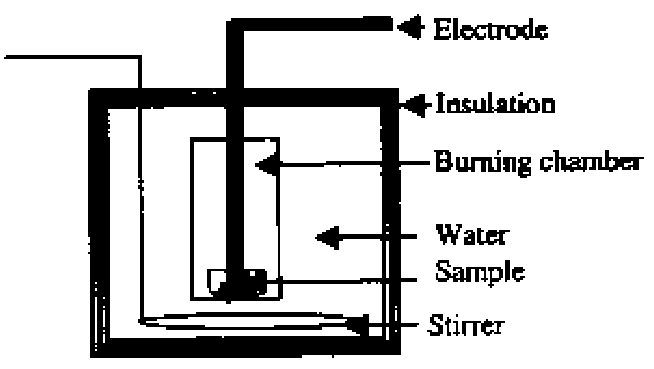
9.5 g of corn flakes containing 5% moisture (wet basis) is oxidized completely to CO₂ and H₂O by ignition in a Bomb Calorimeter (as shown in the figure). The combustion increases the temperature of 2500 g of water from 15°C to 27°C. Assume that the heat capacity and latent heat of vaporization of water are 4.187 kJ kg⁻¹ K⁻¹ and 2257 kJ kg⁻¹, respectively. Neglect any sensible heat gain by water vapour. The calorific value of the flake is
A. 18.28 kJ g⁻¹ (4.37 kcal g⁻¹)
B. 9.79 kJ g⁻¹ (2.34 kcal g⁻¹)
C. 14.04 kJ g⁻¹ (3.36 kcal g⁻¹) correct
D. 22.43 kJ g⁻¹ (5.36 kcal g⁻¹)
Q14MCQ2 marks
Match the following items in Group I and Group II in relation to permitted food additives/preservatives in India
Group I: P. Jelly Q. Edible oil R. Meat flavour enhancer S. Bread
Group II: 1. Calcium propionate 2. Monosodium glutamate 3. Sodium benzoate 4. Butylated hydroxylated anisole 5. Tricalcium silicate
A. P-3, Q-4, R-2, S-1 correct
B. P-5, Q-3, R-2, S-4
C. P-1, Q-3, R-4, S-5
D. P-2, Q-3, R-1, S-5
Q15MCQ2 marks
Preparation of sweet coated breakfast cereals like corn flakes includes several major processing steps, like
P: Soaking in water followed by steaming of corn grits
Q: Coating of sugar followed by drying of flakes
R: Breaking the whole corn into large grits
S: Flaking of cooked grits
T: Packaging of finished product
U: Toasting of flakes
V: Cleaning of whole corn
The correct sequence for the preparation of sugar coated corn flake is
A. V → U → Q → P → S → R → T
B. V → R → S → P → U → Q → T
C. V → U → P → Q → S → R → T
D. V → R → P → S → U → Q → T correct
Q16MCQ2 marks
A bacterial strain isolated from meat is inoculated in a growth medium at a cell density of 2 × 10⁵ cells/ml. Then, 0.2 ml of the culture broth is withdrawn immediately and mixed with 0.8 ml of sterile saline. This sample is diluted by mixing 0.1 ml of it with 99.9 ml sterile water. Then 0.1 ml of this diluted solution is spread on appropriate nutrient agar plate. The number of colonies expected on the agar plate is
A. 4 correct
B. 40
C. 400
D. 4000
Q17MCQ2 marks
Water at 20°C is pumped from a base tank to an elevated tank, 15 m above the base tank. Water flows at a rate of 5.0 × 10⁻³ m³ s⁻¹ through a pipe having internal diameter of 0.1023 m. Frictional energy loss in the pipe is 6.837 J kg⁻¹. The pump has an efficiency of 65%. Density and viscosity of water are 998.2 kg m⁻³ and 1.005 × 10⁻³ Pa s, respectively.
Reynolds number for water flowing through the pipe is
A. 5.286 × 10⁴
B. 6.180 × 10⁴ correct
C. 2.285 × 10⁴
D. 1.252 × 10⁵
Q18MCQ2 marks
Water at 20°C is pumped from a base tank to an elevated tank, 15 m above the base tank. Water flows at a rate of 5.0 × 10⁻³ m³ s⁻¹ through a pipe having internal diameter of 0.1023 m. Frictional energy loss in the pipe is 6.837 J kg⁻¹. The pump has an efficiency of 65%. Density and viscosity of water are 998.2 kg m⁻³ and 1.005 × 10⁻³ Pa s, respectively.
Power needed for pumping water in kW is
A. 1.182 correct
B. 3.334
C. 0.985
D. 2.226
Q19MCQ2 marks
True density and bulk density of rice grain are 1230 kg m⁻³ and 740 kg m⁻³, respectively, and that of wheat grain are 1360 kg m⁻³ and 650 kg m⁻³, respectively.
The void fractions of a bed of rice and that of wheat are respectively,
A. 0.331 and 0.546
B. 0.662 and 0.261
C. 0.398 and 0.480
D. 0.398 and 0.522 correct
Q20MCQ2 marks
True density and bulk density of rice grain are 1230 kg m⁻³ and 740 kg m⁻³, respectively, and that of wheat grain are 1360 kg m⁻³ and 650 kg m⁻³, respectively.
Assume the bulk volume for the mixture of two grains follows additive rule. If the bulk density of a mixture of rice and wheat is 700 kg m⁻³, weight percentage of wheat in the mixture is nearly
A. 41 correct
B. 50
C. 24
D. 36
Q21MCQ2 marks
D₀ value of a bacterium is determined by using two thin walled glass capillary tubes filled with same bacterial suspension in distilled water. The sealed capillaries are dipped in an oil bath maintained at 121°C and kept for 60 s and 135 s, respectively. These capillaries are cooled immediately in ice water. Number of survivals remained in the respective tubes are 2000 and 300.
D₀ value (in minutes) of the bacterium is
A. 1.32
B. 0.52
C. 1.52 correct
D. 2.52
Q22MCQ2 marks
D₀ value of a bacterium is determined by using two thin walled glass capillary tubes filled with same bacterial suspension in distilled water. The sealed capillaries are dipped in an oil bath maintained at 121°C and kept for 60 s and 135 s, respectively. These capillaries are cooled immediately in ice water. Number of survivals remained in the respective tubes are 2000 and 300.
The processing time (in minutes) to kill 99.999% of the bacteria in any food at 121°C will be
A. 7.60 correct
B. 6.60
C. 12.62
D. 2.60
Worked solutions are not printed here — every one of these questions carries a
full explanation inside the test itself, which is where it is actually useful:
after an answer has been committed.
Sit the 2010 paper.


 correct