Which of the following is an intrinsic factor influencing microbial growth in food?
A. Temperature
B. Relative humidity
C. Nutrients correct
D. Gas composition
Q4MCQ1 mark
Which of the following combination of starter cultures is mostly used for the production of yoghurt?
A. Lactobacillus casei and Lactobacillus delbrueckii
B. Lactobacillus delbrueckii and Streptococcus thermophilus correct
C. Lactobacillus acidophilus and Leuconostoc mesenteroides
D. Streptococcus thermophilus and Leuconostoc mesenteroides
Q5MCQ1 mark
Potassium bromate is used to improve the gluten quality of wheat dough by increasing
A. protein-protein ester linkages
B. protein-protein disulphide linkages correct
C. protein-protein interaction with large number of H-bonds
D. protein-starch interaction with large number of H-bonds
Q6MCQ1 mark
Which of the following substances is NOT a Class I preservative in food
A. Vinegar
B. Sodium benzoate correct
C. Vegetable oils
D. Citric acid
Q7MCQ1 mark
Saturated steam at temperature Tₛ (°C) flows through a pipe and atmospheric air flows over the outer surface of the pipe. If the temperature of the air has increased from Tᵢ to Tₒ, the effectiveness of the heat exchange can be expressed as
A. (Tₛ − Tₒ)/(Tₛ − Tᵢ)
B. (Tₛ − Tᵢ)/(Tₛ − Tₒ)
C. (Tₒ − Tᵢ)/(Tₛ − Tᵢ) correct
D. (Tₒ − Tᵢ)/(Tₛ − Tₒ)
Q8MCQ1 mark
Convective mass transfer coefficient of water vapour diffusing from a water surface to air depends primarily on
A. velocity of air correct
B. viscosity of water vapour
C. density of water vapour
D. specific heat of water vapour
Q9MCQ2 marks
The following was obtained from an analysis of two oil samples A and B
(a) Iodine value of A is greater than iodine value of B
(b) Reichert Meissl value of A is less than Reichert Meissl value of B
Based on the above analysis, the following is the correct statement
A. Oil A is more unsaturated than oil B and has low molecular weight fatty acids
B. Oil A is less unsaturated than oil B and has low molecular weight fatty acids
C. Oil A is less unsaturated than oil B and has high molecular weight fatty acids
D. Oil A is more unsaturated than oil B and has high molecular weight fatty acids correct
Q10MCQ2 marks
Match the items in Group I with the most appropriate items in Group II
Group I: (P) Iodine (Q) Curing salt (R) Avidin (S) Mono sodium glutamate
Group II: (1) Biotin (2) Flavour enhancer (3) Goitre (4) Sausage (5) Anemia
A. P-3, Q-4, R-1, S-2 correct
B. P-5, Q-4, R-1, S-2
C. P-3, Q-4, R-5, S-2
D. P-5, Q-2, R-1, S-4
Q11MCQ2 marks
Protein denaturation is a phenomenon of change in three dimensional structure of protein, and consequently an alteration of its functionality. Which of the following statement is NOT related to protein denaturation?
A. Accessibility of proteolytic enzymes to peptide bonds increases
B. Solubility and enzymatic activity of native protein decrease
C. Intrinsic viscosity and optical rotation of the protein solution increase
D. Increase in intrinsic viscosity through formation of amino acids by hydrolysis correct
Q12MCQ2 marks
If v is the reaction rate, Vₘₐₓ is the maximum reaction rate, Kₘ is the Michaelis-Menton constant and [S] is the substrate concentration, the Lineweaver-Burk plot for NO INHIBITION enzymatic reaction can be written as
A. 1/v = (Kₘ/Vₘₐₓ)(1/[S]) + 1/Vₘₐₓ correct
B. 1/v = Kₘ[S]/Vₘₐₓ + 1/Vₘₐₓ
C. 1/v = Kₘ/Vₘₐₓ + [S]/Vₘₐₓ
D. 1/v = Kₘ/Vₘₐₓ + [S]²/Vₘₐₓ
Q13MCQ2 marks
Match the items in Group I with the most appropriate items in Group II
Group I: (P) PER (Q) Synerisis (R) Soyabean (S) Lemon
Group II: (1) Jelly (2) Essential amino acids (3) Neral (4) Saponin (5) Lycopene
A. P-2, Q-1, R-4, S-5
B. P-2, Q-1, R-5, S-4
C. P-2, Q-1, R-4, S-3 correct
D. P-5, Q-1, R-4, S-3
Q14MCQ2 marks
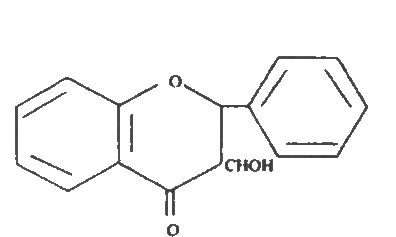
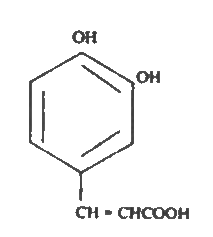
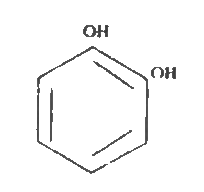
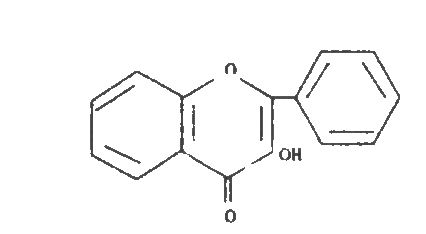
Which of the following is the structure of flavonol?
A. (A)
B. (B) correct
C. (C)
D. (D)
Q15MCQ2 marks
The specific growth rate of Bacillus cereus in a food sample is 0.4 h⁻¹. Doubling time of the cell is
A. 2.0 h
B. 1.73 h correct
C. 1.25 h
D. 1.0 h
Q16MCQ2 marks
Match the items in Group I with the most appropriate items in Group II
Group I: (P) Cheese (Q) Enterotoxin B (R) Bacteriocin (S) Milk ropiness
Group II: (1) Hydrogen peroxide (2) Nisin (3) Propionibacterium (4) Alcaligenes (5) Staphylococcus aureus
A. P-5, Q-1, R-2, S-4
B. P-3, Q-1, R-5, S-4
C. P-3, Q-5, R-2, S-4 correct
D. P-3, Q-5, R-2, S-1
Q17MCQ2 marks
Five grams of cheese was mixed with 45 ml of sterile diluent. Two successive dilutions of 1:100 each were made and one-tenth milliliter from the last dilution was plated onto each of two plates containing plate count agar (PCA) medium. Following incubation, 56 colonies were counted on one plate and 54 on the other. The average number of colony forming units (CFUs) per gram of cheese is
A. 5.5 x 10⁵
B. 5.5 x 10⁶
C. 5.5 x 10⁷ correct
D. 5.5 x 10⁸
Q18MCQ2 marks
Match the items in Group I with the most appropriate items in Group II
Group I: (P) Spore former (Q) Vinegar (R) Psychrotroph (S) Dysentery
Group II: (1) Listeria (2) Shigella (3) Lactobacillus (4) Bacillus (5) Acetobacter
A. P-3, Q-5, R-4, S-2
B. P-4, Q-5, R-1, S-2 correct
C. P-4, Q-5, R-1, S-3
D. P-4, Q-3, R-1, S-2
Q19MCQ2 marks
Development of 'hot spot' in high moisture grain during storage in silo is due to
A. exothermic reaction between moisture and starch present in the endosperm of the grain
B. microbial growth and respiration of grain correct
C. heating of the silo wall during day and cooling during night
D. exothermic reaction between the moisture present in endosperm and the oil in germ
Q20MCQ2 marks
In modern rice mills, the two rubber rolls in the sheller rotate in opposite direction at the
A. same rotational speed and different surface speed
B. same rotational speed and same surface speed
C. different rotational speed and different surface speed correct
D. different rotational speed and same surface speed
Q21MCQ2 marks
Two food materials A and B, each having 14% moisture content (dry basis) are stored in a constant relative humidity chamber at 30°C for equilibration. The final moisture contents of A and B are 6% and 12% (both in dry basis), respectively. The final water activity a_wA of A and a_wB of B are related as
A. a_wA : a_wB = 0.65:1
B. a_wA : a_wB = 1:1 correct
C. a_wA : a_wB = 1:2
D. a_wA : a_wB = 2:1
Q22MCQ2 marks
Match the items in Group I with the most appropriate items in Group II
Group I: (P) Disc centrifuge (Q) Multiple effect evaporator (R) UHT processing (S) Homogenization
Group II: (1) Separation of solid phase in milk by coagulation (2) Aseptic packaging of milk (3) Separation of liquid phases in milk (4) Dispersion of one of the liquid phases in milk (5) Concentration of milk
A. P-3, Q-5, R-1, S-4
B. P-1, Q-5, R-2, S-4
C. P-3, Q-5, R-2, S-1
D. P-3, Q-5, R-2, S-4 correct
Q23MCQ2 marks
Rigor mortis in meat is due to
A. glycolysis followed by formation of lactic acid
B. binding of collagen and elastin
C. action of cathepsin enzyme in meat
D. binding of myosin and actin correct
Q24MCQ2 marks
Following operations are adopted for cleaning in place (CIP) of equipment
P: Cold water rinse; Q: Hot water rinse; R: Alkali cleaning; S: Acid cleaning
The correct sequence of CIP for equipment used in UHT processing of milk is
A. P → Q → R → S → P
B. P → Q → R → Q → S → P correct
C. P → Q → R → P
D. P → Q → S → P
Q25MCQ2 marks
Following operations are adopted for refining of vegetable oils
P: Winterization; Q: Alkali refining; R: Steam deodorization; S: Bleaching; T: Degumming
The correct sequence of operations for the refining is
A. P → Q → T → R → S
B. S → R → Q → P → T
C. T → Q → S → R → P correct
D. R → T → Q → S → P
Q26MCQ2 marks
A liquid having density ρ and viscosity μ flows under laminar condition through a circular pipe having diameter D and length L against a pressure drop of ΔP. Volume flow rate of the liquid through the pipe will be proportional to
A. D⁴ΔPρ/(μL)
B. D²ΔP/(ρμL)
C. DΔPρ/(μL)
D. D⁴ΔP/(μL) correct
Q27MCQ2 marks
A liquid having mass M (kg), heat capacity Cₚ (J.kg⁻¹.°C⁻¹) is cooled in an agitated vessel having surface area A (m²). A cooling medium at temperature Tₛ (°C) is used for cooling the liquid. The differential equation governing the temperature change dT/dθ of liquid with overall heat transfer coefficient U (W.m⁻².°C⁻¹) for the vessel is given by
A. dT/dθ = (UA/MCₚ)(Tₛ − T) correct
B. −dT/dθ = (UA/MCₚ)(Tₛ − T)
C. dT/dθ = (MCₚ/UA)(Tₛ − T)
D. −dT/dθ = (MCₚ/UA)(Tₛ − T)
Q28MCQ2 marks
Match the items in Group I with the most appropriate items in Group II
Group I: (P) Freezing (Q) Fat globules movement in milk (R) Flow through packed bed (S) Boiling temperature
Group II: (1) Stoke's law (2) Plank's equation (3) Ergun's equation (4) Hagen Poiseulli's equation (5) Raoult's law
A. P-4, Q-1, R-3, S-5
B. P-2, Q-1, R-3, S-4
C. P-2, Q-1, R-4, S-5
D. P-2, Q-1, R-3, S-5 correct
Q29MCQ2 marks
Milk having heat capacity 3900 J.kg⁻¹.°C⁻¹ and density 1020 kg.m⁻³ is pressurized to 300 atmosphere gauge pressure and allowed to flow through a high pressure homogenizing valve at a rate of 60 liters per min. The diameter of the homogenizing valve through which the milk flows is 6 mm. (1 atmosphere = 101.3 kPa)
Temperature rise in milk will be
A. 10.1 °C
B. 9.2 °C
C. 7.7 °C correct
D. 6.1 °C
Q30MCQ2 marks
Milk having heat capacity 3900 J.kg⁻¹.°C⁻¹ and density 1020 kg.m⁻³ is pressurized to 300 atmosphere gauge pressure and allowed to flow through a high pressure homogenizing valve at a rate of 60 liters per min. The diameter of the homogenizing valve through which the milk flows is 6 mm. (1 atmosphere = 101.3 kPa)
Height of the valve lift will be
A. 0.06 mm
B. 0.11 mm
C. 0.16 mm
D. 0.22 mm correct
Q31MCQ2 marks
A medium acid food is sterilized at 100°C in a can to reduce the number of heat resistant organism (D₁₂₀ = 0.2 min; z = 10°C) from an initial count of 10000 per can to a probability of survival of 1 in million.
D₁₀₀ value of this organism is
A. 0.4 min
B. 20 min correct
C. 4 min
D. 10 min
Q32MCQ2 marks
A medium acid food is sterilized at 100°C in a can to reduce the number of heat resistant organism (D₁₂₀ = 0.2 min; z = 10°C) from an initial count of 10000 per can to a probability of survival of 1 in million.
The total processing time is
A. 100 min
B. 40 min
C. 200 min correct
D. 4 min
Q33MCQ2 marks
Compressed air at 0.5 atmosphere gauge pressure and 30°C contains 0.01 kg water vapor per kg dry air. Molecular weight of dry air and water vapor are 28.9 and 18 kg.kmol⁻¹, respectively. Saturation vapor pressure of water at 30°C is 4.246 kPa absolute. (1 atmosphere = 101.3 kPa)
Partial pressure of water vapor inside the compressor is
A. 2.15 kPa
B. 2.40 kPa correct
C. 3.12 kPa
D. 3.51 kPa
Q34MCQ2 marks
Compressed air at 0.5 atmosphere gauge pressure and 30°C contains 0.01 kg water vapor per kg dry air. Molecular weight of dry air and water vapor are 28.9 and 18 kg.kmol⁻¹, respectively. Saturation vapor pressure of water at 30°C is 4.246 kPa absolute. (1 atmosphere = 101.3 kPa)
Relative humidity of air inside the compressor is
A. 40.1%
B. 49.8%
C. 56.5% correct
D. 57.6%
Worked solutions are not printed here — every one of these questions carries a
full explanation inside the test itself, which is where it is actually useful:
after an answer has been committed.
Sit the 2008 paper.


 correct