Among the following amino acids, the one that has a disulfide linkage is
A. (-)-proline
B. (-)-cystine correct
C. (-)-cysteine
D. (-)-histidine
Q2MCQ1 mark
The method of packaging of food under sterile environment, after independently sterilizing the food and packing material, is termed as
A. active packaging
B. vacuum packaging
C. flexible packaging
D. aseptic packaging correct
Q3MCQ1 mark
Mild heat treatment of food to inactivate enzymes that would otherwise cause its deterioration during frozen storage is termed as
A. stewing
B. blanching correct
C. boiling
D. pasteurization
Q4MCQ1 mark
The most suitable evaporator for concentration of fruit juices is
A. agitated film evaporator
B. falling film evaporator correct
C. long tube evaporator
D. short tube evaporator
Q5MCQ1 mark
Souring of milk is primarily due to the conversion of lactose to
A. lactobionic acid
B. lactic acid correct
C. lactol
D. lactonic acid
Q6MCQ1 mark
The selective media used for isolating Escherichia coli is
A. blood agar
B. mannitol salt agar
C. eosin methylene blue agar correct
D. rose bengal malt extract agar
Q7MCQ1 mark
A method in which continuous electric current is passed through food to heat it rapidly while maintaining quality is called
A. microwave cooking
B. irradiation
C. ohmic heating correct
D. sonication
Q8MCQ1 mark
A cyclone separator is used for the separation of
A. particles from liquid
B. liquid droplets from gas
C. fine particles from gas correct
D. fine particles from solids
Q9MCQ2 marks
Match the items in Group I with the most appropriate items in Group II.
Group I: P. Tocopherol Q. Myoglobin R. Crocetin S. Catechin
Group II: 1. Oxygen binding 2. Yellow pigment 3. Antioxidant 4. Green pigment 5. Tanning agent
A. P–3, Q–1, R–2, S–5 correct
B. P–1, Q–3, R–4, S–5
C. P–3, Q–1, R–5, S–2
D. P–1, Q–3, R–5, S–4
Q10MCQ2 marks
Two key reactions involved in enzymatic browning of food are
A. hydroxylation of phenol to p-dihydroxybenzene followed by its oxidation to p-quinone
B. oxidation of phenol to p-quinone followed by its reduction to p-dihydroxybenzene
C. oxidation of phenol to o-quinone followed by its reduction to o-dihydroxybenzene
D. hydroxylation of phenol to o-dihydroxybenzene followed by its oxidation to o-quinone correct
Q11MCQ2 marks
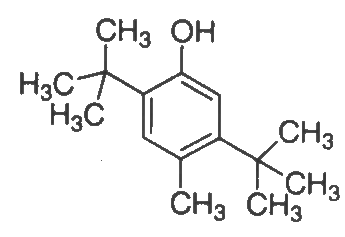
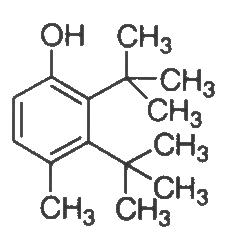
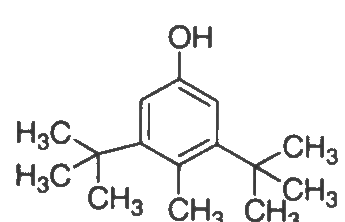
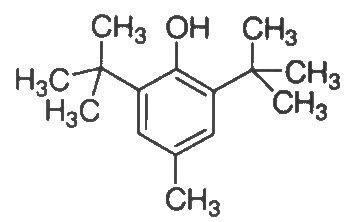
The correct structure of synthetic antioxidant BHT (butylated hydroxy toluene) is
A. (A) correct
B. (B)
C. (C)
D. (D)
Q12MCQ2 marks
Wet grain was dried from an initial moisture content of 50% to a final moisture content of 20% (on wet basis). The amount of moisture removed to get 1000 kg of the final product is
A. 800 kg
B. 200 kg
C. 300 kg
D. 600 kg correct
Q13MCQ2 marks
The correct pair of food borne disease and its causative microorganism is
A. Hemorrhagic inflammation of intestinal wall – Camplylobacter jejuni correct
B. Paratyphoid fever – Staphylococcus aureus
C. Typhoid fever – Solmonella typhimurium
D. Listerellosis – Leptospira biflexa
Q14MCQ2 marks
Fermentation process of vinegar production involves
A. ethanolic fermentation followed by reduction of ethanol
B. direct acetic acid production without ethanolic fermentation
C. anaerobic fermentation of acetone
D. ethanolic fermentation followed by oxidation of ethanol correct
Q15MCQ2 marks
In a double pipe heat exchanger the outer diameter of the inner pipe is d₁ and the inner diameter of the outer pipe is d₂. The equivalent diameter of the annulus for heat transfer is
A. (d₁ + d₂)/2
B. (d₂² − d₁²)/d₁ correct
C. (d₂ − d₁)
D. (d₂² − d₁²)/d₁d₂
Q16MCQ2 marks
Match various phases of a typical bacterial growth cycle in Group I with most appropriate bacterial activity in Group II.
Group I: P. Lag phase Q. Exponential phase R. Stationary phase S. Decline phase
Group II: 1. Number of viable cells decreases 2. Growth ceases and population remains constant 3. Preparatory phase for cell division 4. Cells divide steadily at constant rate 5. Cells aggregate
A. P-4, Q-3, R-2, S-1
B. P-5, Q-4, R-1, S-2
C. P-2, Q-1, R-3, S-4
D. P-3, Q-4, R-2, S-1 correct
Q17MCQ2 marks
The weight of 20 g of dried cabbage containing 5 % moisture after rehydration is 190 g. If the fresh cabbage contained 93 % moisture, the coefficient of rehydration is
A. 0.70 correct
B. 0.75
C. 0.07
D. 0.57
Q18MCQ2 marks
At atmospheric pressure, the solubilities of CO₂ in a beverage at 15.5 °C and 0 °C are 1.0 volume and 1.7 volume respectively. The pressure (in atm.) required to carbonate the beverage at 4.5 °C so as to maintain a gas volume of 4.0 is
A. 1.04
B. 1.47
C. 1.67 correct
D. 1.76
Q19MCQ2 marks
The partial pressure and vapour pressure of water vapour in air at 27 °C and 1 atm. are 0.028 and 0.035 atm. respectively. (Molecular weight of air is 29)
The humidity of air (kg water /kg air) is
A. 0.496
B. 0.082
C. 0.018 correct
D. 0.046
Q20MCQ2 marks
The partial pressure and vapour pressure of water vapour in air at 27 °C and 1 atm. are 0.028 and 0.035 atm. respectively. (Molecular weight of air is 29)
The percentage relative humidity of air is
A. 46
B. 80 correct
C. 20
D. 35
Q21MCQ2 marks
In an ice-cream manufacturing plant, 1450 litres of ice-cream was obtained from 1000 litres of ice-cream mix. The composition of ice-cream mix was as follows:
Fat: 12.0 %, Sugar: 15.0 %, Milk solids not fat: 11.0 %, Stabilizer & emulsifier: 0.3 %.
Specific gravity of ice-cream mix at 16 °C is
A. 1.096 correct
B. 0.196
C. 1.906
D. 0.916
Q22MCQ2 marks
In an ice-cream manufacturing plant, 1450 litres of ice-cream was obtained from 1000 litres of ice-cream mix. The composition of ice-cream mix was as follows:
Fat: 12.0 %, Sugar: 15.0 %, Milk solids not fat: 11.0 %, Stabilizer & emulsifier: 0.3 %.
Percent over run in the ice-cream was
A. 35
B. 50
C. 40
D. 45 correct
Q23MCQ2 marks
In an experiment, the thermal death time (TDT) values for a microorganism were obtained as 2.78 minutes and 9.98 minutes at 121.1 °C and 115.5 °C, respectively.
The z-value (°C) of the microorganism is
A. 9.91 correct
B. 9.19
C. 1.99
D. 0.19
Q24MCQ2 marks
In an experiment, the thermal death time (TDT) values for a microorganism were obtained as 2.78 minutes and 9.98 minutes at 121.1 °C and 115.5 °C, respectively.
The TDT value (minutes) at 110 °C is
A. 35.1 correct
B. 25.8
C. 12.9
D. 21.9
Worked solutions are not printed here — every one of these questions carries a
full explanation inside the test itself, which is where it is actually useful:
after an answer has been committed.
Sit the 2009 paper.


 correct