Starch Gelatinization: The Science of Thickening
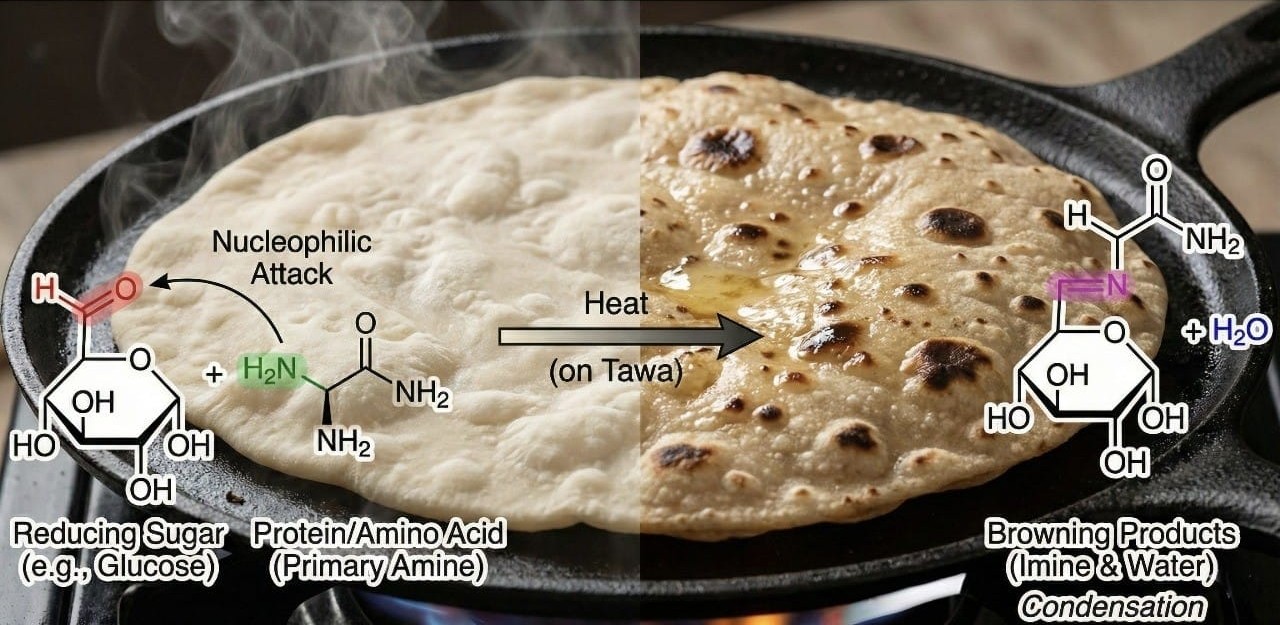
"While the Maillard reaction creates flavor, Gelatinization is the structural backbone of cooking."
Related Concepts
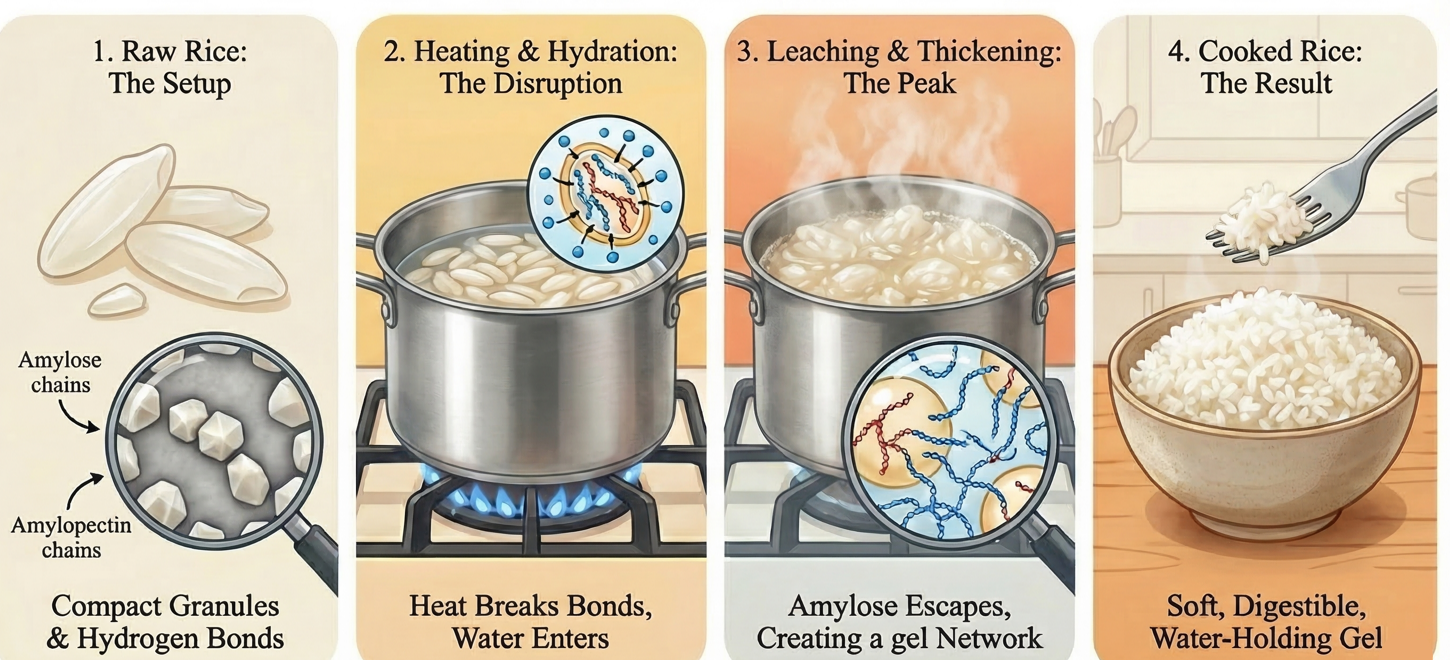
It is the reason pasta softens, sauces thicken, and bread rises. It is the process of converting hard, insoluble starch granules into a digestible, water-holding gel. Here is the step-by-step story of how your sauce gets thick.
1 The Setup (Granule Architecture)
Inside flour, rice, or potatoes, starch exists as microscopic, semi-crystalline "granules." These aren't just piles of sugar; they are highly organized structures containing two specific polymers:
- Amylose: Linear, straight chains (The "structural bars").
- Amylopectin: Highly branched, bushy chains (The "filler").
At room temperature, these chains are locked together by strong Inter-molecular Hydrogen Bonds. Water cannot get in because the structure is too tight and crystalline.
Compact Rigid Yields Starch That Avoids Liquid
2 The Disruption (Heat & Hydration)
The reaction begins when you add heat to the starch-water mixture.
- Energy Input: As temperature rises (usually 60°C - 70°C), the heat energy breaks the weak Hydrogen bonds holding the starch chains together.
- Swelling: Water rushes into the amorphous (less organized) regions of the granule first.
- Loss of Order: The granule swells like a balloon, losing its crystalline structure (a phenomenon called the loss of birefringence). The granule is now a fragile, water-logged sac.
Heat Breaks Hydrogen-bonds
3 The Peak (The Leaching)
This is the critical "thickening" moment. The granule has swollen to many times its original size. The linear Amylose chains are small and mobile enough to escape the granule. They leach out into the surrounding water.
These escaped Amylose chains tangle up with one another and the swollen granules, creating a 3D network that traps water. This restriction of water movement causes the liquid to feel "thick" or viscous.
Amylose Leaching Thickens
The "Sponge" Analogy
The Dry Sponge: Raw starch is like a dry, compressed sponge. Hard and small.
The Soak: Add hot water, and the sponge (granule) expands massively.
The Tangle: The sponges get so big they crowd the pot. Strings (Amylose) fall off and tangle everything up, turning your soup into a stew.
The Big Picture: Gelatinization vs. Retrogradation
| Feature | Gelatinization | Retrogradation |
|---|---|---|
| The Trigger | Heat + Excess Water | Cooling / Freezing |
| Key Movement | Disorder (Entropy) | Re-Order (Recrystallization) |
| Structure | Granules swell & burst | Amylose chains re-align & tighten |
| Texture Result | Soft, Thick, Edible | Hard, Gritty, "Stale" |
| Example | Freshly baked bread | Hard, dry leftover bread |
The Golden Rule
"Gelatinization needs Heat and Water to thicken; Retrogradation needs Time and Cold to harden."
Interesting Applications
🍲
Thickening Sauces
A cornstarch slurry thickens instantly — gelatinized granules swell and trap water in a viscous network.
🍜
Instant Noodles
Pre-gelatinization during manufacture means instant noodles rehydrate in hot water within minutes.
🍞
Baking Crumb Structure
Starch gelatinization in the oven sets the bread crumb — without it the loaf would collapse when cool.
🍮
Custard & Puddings
The silky set of a custard or kheer relies on starch gelatinization — temperature control determines whether it's pourable or sliceable.